
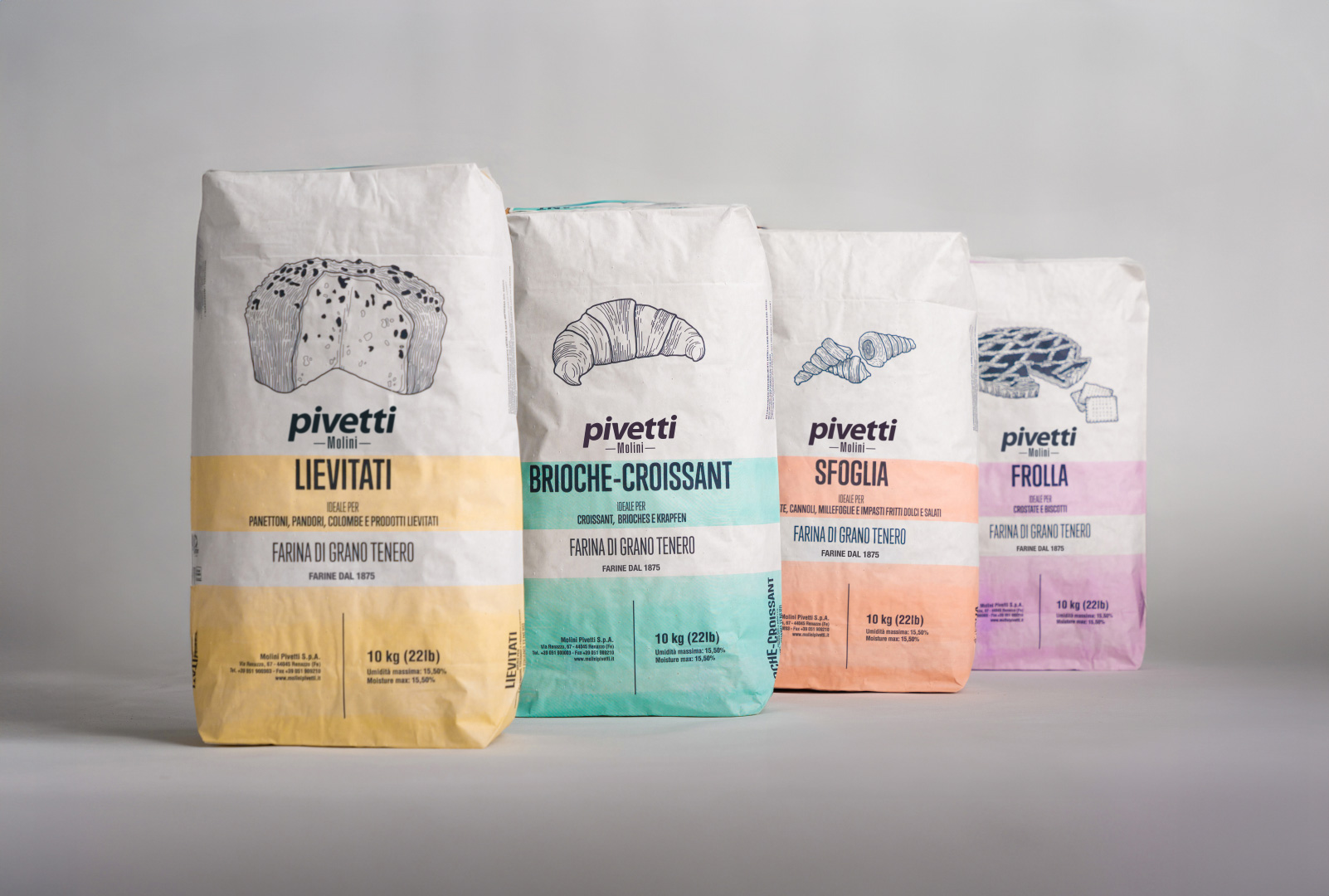
Discover Molini Pivetti pastry flours, designed to enhance desserts, biscuits, and large leavened products, guaranteeing professional and consistently stable results.
Selecting high-performance pastry flours represents a daily challenge for those creating excellence in brioches, shortcrusts, leavened doughs, puff pastries, and tarts. The true difficulty lies in sourcing products with stable technical performance and professional quality, essential for ensuring impeccable and repeatable results.
Using an unsuitable flour carries concrete risks, such as inconsistent results between batches and a waste of precious time and ingredients. This instability slows down production and risks damaging the laboratory’s reputation.
Molini Pivetti offers pastry flours born from selected grains, with the convenience of direct purchase even in large professional formats. Relying on a structured supplier means being able to count on transparent technical sheets, dedicated support, and absolute continuity of supply.
In this content, we will provide practical guidance for navigating through biscuit flours, cake flour, durum wheat semolina, and our organic flours.
How to Choose the Best Pastry Flours
Those dedicated to the “white art,” whether professional or enthusiast, often struggle with the complexity of interpreting the technical parameters reported in the technical sheet.
W strength, protein content, absorption capacity, and stability are values that define the character of the dough that can be created with a given flour. These rheological characteristics must be compatible with leavening times, the desired hydration, the processing the dough must undergo, as well as any addition of fats necessary to obtain the desired final product.
This is why cake flour can have different characteristics and why specific flours exist for biscuits, puff pastry, croissants, or large leavened holiday cakes. Understanding how these parameters interact is fundamental to avoiding production errors and obtaining consistent results in the laboratory.
Key Parameters in Choosing Flour
Neglecting what has just been said creates real operational problems, such as doughs that are difficult to handle, desserts that collapse during baking, or biscuits that turn out tough or deformed. Every inaccuracy translates into costs for tests and waste, undermining quality perception in the eyes of customers.
The ideal choice starts with the analysis of three pillars: the type of product to be made, the processing method adopted, and the required leavening times. To these are added yield and consistency over time, factors that directly impact profit margins.
Professional pastry flours, if well-selected, minimize waste, standardize results batch after batch, and increase the overall profitability of your business.
In this scenario, technical support is a precious ally. Detailed sheets, usage tips, and direct consultancy are fundamental for optimizing processes and resolving any doubts about flour usage.
Biscuit Flours
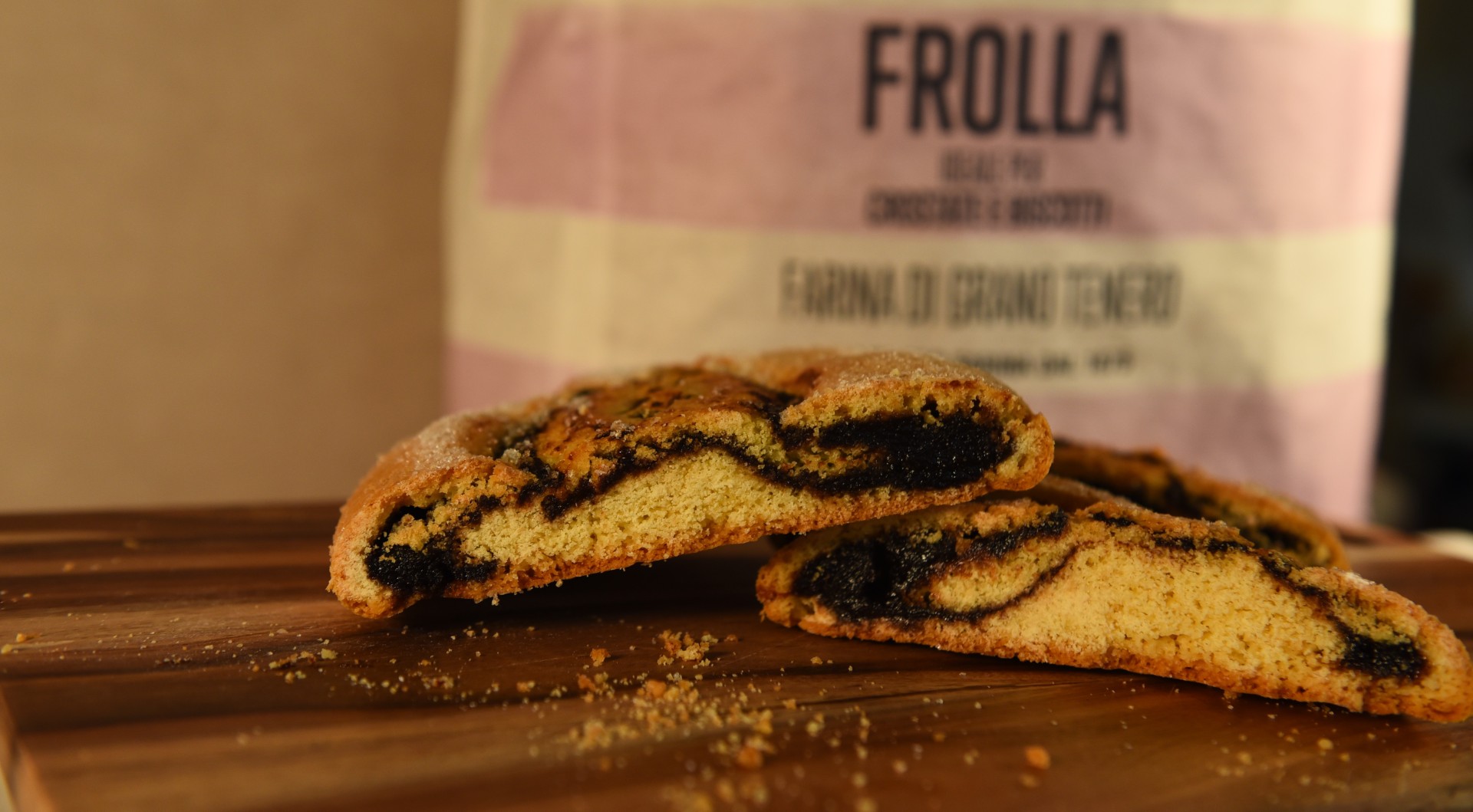
These sweets demand biscuit flours calibrated to ensure stable and extraordinarily crumbly shortcrusts, capable of retaining their shape even in the most intensive productions.
The golden rule of professional laboratories teaches that a low strength is needed, ideal for avoiding excessive gluten development during mixing. Indeed, gluten that is too tough makes biscuits hard, not very crumbly, and difficult to chew.
Unfortunately, many pastry chefs still resort to poorly balanced generic flours intended for bread-making. This choice prevents them from offering a standardized line of biscuits with consistently stable quality.
To recognize the best biscuit flours:
- Check strength and absorption on the label: look for W values between 90 and 170 and controlled absorption capacity, ideal for shortcrusts that hold their shape without hardening;
- Reduce waste and testing times: dedicated biscuit flours allow you to set the recipe and replicate it without continuous trials, cutting laboratory costs;
- Discover Pivetti Frolla flour: created for professional biscuits and shortcrusts, it guarantees controlled crumbliness, shape retention, and standardization of the production process;
- Use the same biscuit flours for tarts and crumbly bases: rationalizing usage optimizes stock and reduces management complexity in the laboratory.
Choosing dedicated biscuit flours allows for consistent results, perfect fragrance, and less waste of raw materials.
Those who adopt these criteria develop stable product lines, with predictable margins and perceived quality by the final customer. Those who neglect them remain tied to repeated attempts and random results, with negative impacts on reputation and profitability.
Cake Flour
Creating soft cakes, tarts, and pies requires a perfect harmony between consistency and tenderness. This balance is achieved by selecting cake flour with targeted technical parameters. We are talking about a correct strength that supports the dough without making it stiff, and an absorption capacity that guarantees melt-in-the-mouth texture.
In summary, selecting an appropriate cake flour guarantees a clean cut, a uniform consistency, and a reliable yield.
Do you want to be sure you’ve found the right shortcrust flour? Try the Pivetti jam tart recipe: replicating a tested recipe allows you to evaluate the characteristics of the cake flour in the field and assess its yield in your own laboratory.
This allows for the creation of high structural quality desserts and minimizes errors and waste during processing. All of this ensures consistent and predictable results batch after batch, consolidating the laboratory’s production efficiency and the structural quality of its offering.
Durum Wheat Semolina
Many professionals associate durum wheat semolina exclusively with bread and pasta, underestimating its strategic role in pastry. Yet durum wheat semolina offers unique textures in rustic shortcrusts, biscuits, and crunchy bases, capable of differentiating the laboratory’s offering.
Not considering durum wheat semolina means limiting the variety of proposals, giving up an ingredient that confers identity and crunchiness to products. In an increasingly competitive context, attention to these details distinguishes an innovative pastry shop from one that risks remaining anonymous.
Pivetti durum wheat semolina indeed allows for enriching the offering in a genuine way.
To enhance its qualities, it is essential to know the substitution ratios with soft flours, the different liquid absorption, and its ability to enhance golden color and graininess. It is therefore clear that the technical consultancy of the flour producer proves to be a valuable tool for the effective adoption of durum wheat semolina in the laboratory.
Integrating semolina into the range of laboratory flours is not just experimentation, but a strategic choice to expand the catalog and attract customers looking for authentic flavors.
Why Choose Organic Flours?
Pastry chefs and final consumers often perceive “organic” as a generic label, without understanding its concrete impacts on the supply chain, positioning, and customer perception.
This awareness gap leads to underestimating a constantly growing segment, sensitive to sustainability and willing to pay a premium price for genuine and certified products.
Ignoring organic means losing market share and facing difficulties in differentiating the offer in an increasingly crowded context. In mature markets, where price competition is fierce, organic can be a point of differentiation also for building an image that can justify higher prices with solid and verifiable arguments.
Pivetti organic flours represent a concrete strategic lever to strengthen your laboratory’s positioning.
Organic certification guarantees the absence of synthetic chemical treatments and compliance with organic standards.
To maximize this advantage, they should be included in a strategy consistent with other laboratory choices, such as the use of local ingredients, sustainable packaging, and transparency regarding processes.
Why is it Important to Choose Specific Pastry Flours?
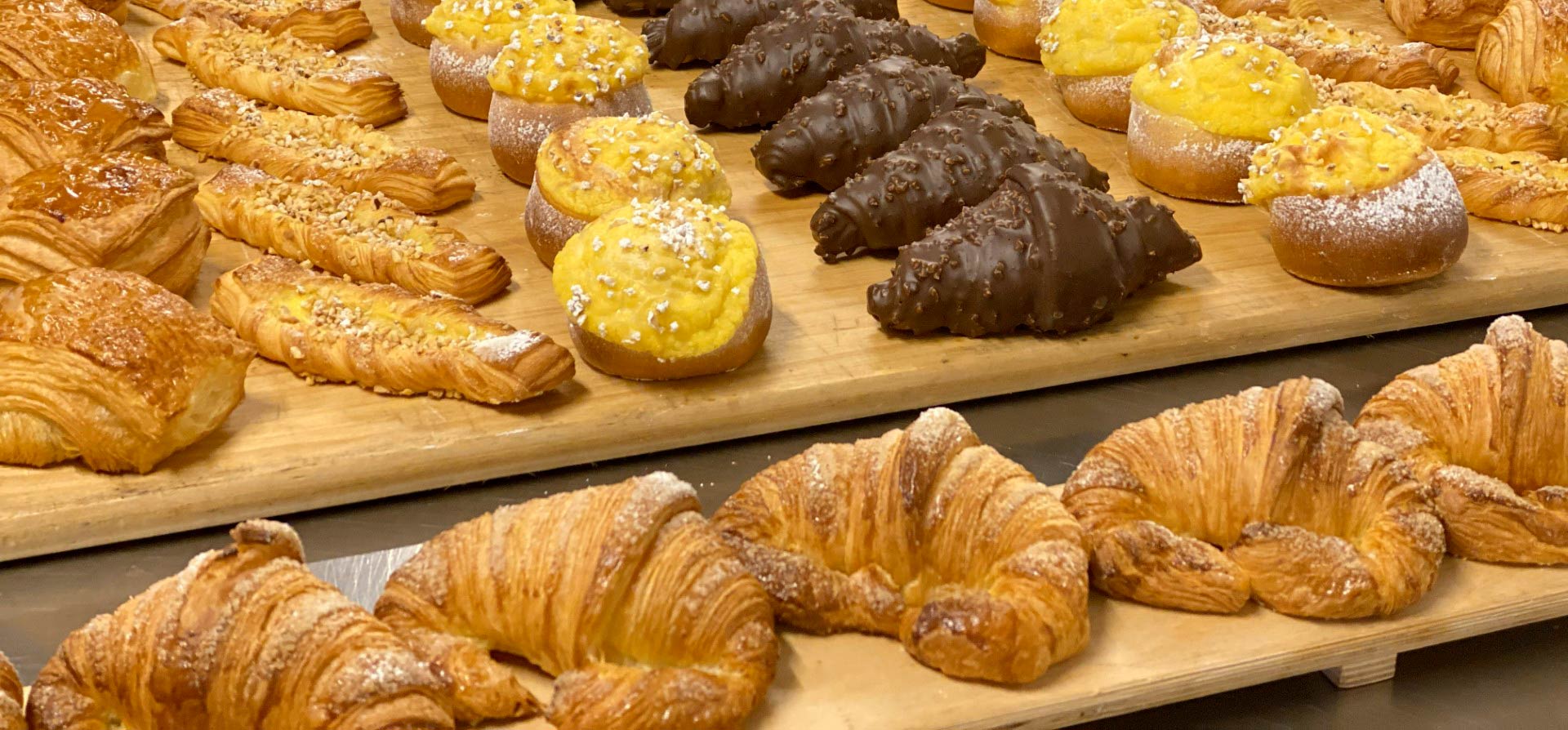
Pastry flours are the result of the selection of grains designed to respond to specific processes, from brioches to croissants, from puff pastry to large leavened cakes.
Every preparation requires different dough behaviors. These range from the ability to withstand long leavening to resistance to butter layering without tearing, up to controlled development during baking.
Unlike “all-purpose” flours, pastry flours ensure structural hold, controlled volume, and irregular crumb structure. A well-layered croissant, for example, requires pastry flours with a strength between 330 and 370 W, capable of supporting the folds without falling apart.
Here are the Pivetti pastry flours and their advantages:
- Pivetti flour for brioche and croissant: designed for layered and buttery structures, it supports the folds and guarantees uniform development;
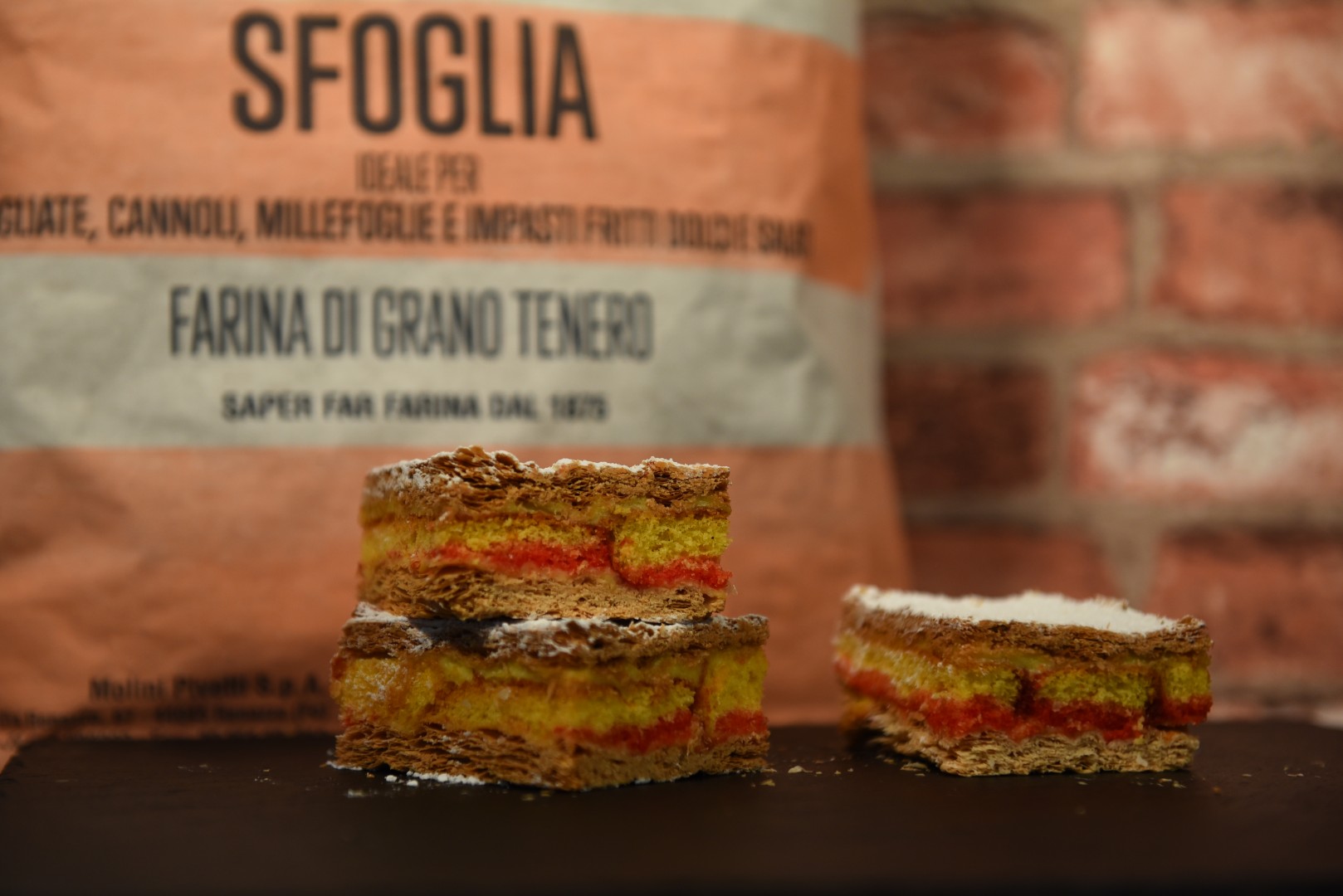
- Pivetti Sfoglia flour for perfect lamination: unlike generic flour, it is designed to hold during lamination and develop in the oven without losing shape;
- Pivetti Lievitati flour for large volumes: ideal for Panettone, Colomba, and holiday leavened cakes, with high strength and stability.
Using dedicated technical flours improves consistency of result, speeds up production processes, and strengthens the professional perception of the finished product. Those who invest in these flours can reposition their price lists upwards and build a solid reputation in the professional market.
The range of Pivetti professional flours includes formats suitable for the most diverse needs of the laboratory, guaranteeing support and constant supplies over time.
Buy Professional Flours from Molini Pivetti
Convinced of the importance of technical flours, for decades many pastry chefs have turned to Molini Pivetti, aware of the need to have pastry flours that deliver what they promise.
The keyword is reliability and constant availability over time. Working with inconsistent supply channels creates operational problems. You are forced to change suppliers suddenly, and unclear prices make it difficult to establish costs.
Added to this is the inability to precisely plan purchases and stock, risking product availability during high-demand seasons. The Pivetti Hub Large Formats shop represents the direct transactional channel to try the Molini Pivetti professional range.
Buying directly from our shop offers concrete advantages:
- A complete and professional range of flours for pastry, bread-making, and pizza;
- Guaranteed continuity of supply, with constant availability of key references;
- Ability to plan purchases in advance and manage stock based on production cycles;
- The opportunity to test new flours in professional formats before introducing them permanently into production.
This is how Molini Pivetti has built its path, from the small family mill in Renazzo to the most advanced milling technologies.
Here, in our land of origin, Emilia, we cultivate our tradition and bring a 150-year-long history of love, dedication, and respect for the land to international markets. And it is with this same philosophy that we continue to innovate, offering professionals the best flours to give shape to every creation.
Molini Pivetti: tradition, passion, and inspiration. In every recipe.
If you are a professional, choose Molini Pivetti flours
Do you want to know which flour is right for you? Do you need more information about our flours for professionals? Would you like to know where to buy them?
Fill in our contact form and ask for further information, we will be pleased to help you.


